Monday, November 23, 2020

Increased‌ ‌Remote‌ ‌Work‌ ‌Should‌ ‌Have‌ ‌Little‌ ‌Impact‌ ‌on‌ ‌Workers’‌ ‌Compensation‌ ‌Coverage‌ ‌

As more employees work from home in response to the COVID-19 pandemic, employers and workers are considering the implications for workers’ compensation claims, because accidents can happen at home as easily as in the traditional workplace.

As stated by Insurance Business America, home-based employees have the same workers’ compensation benefits as office employees do.

Little should change in terms of workers’ compensation coverage if employees begin working from home, or “telecommuting.” If you have been working from home and have been injured in an accident while performing work duties and cannot work, you may be entitled to workers’ compensation just as if you had been injured in an office or on the job at a construction site.

In the Raleigh, N.C., area, the workers’ compensation attorneys at Younce, Vtipil, Baznik & Banks, P.A., can help you seek the full benefits available by law after a serious on-the-job injury. At the first sign that your employer or their workers’ compensation insurer is disputing your claim for benefits, contact a Raleigh workers’ comp lawyer at Younce, Vtipil, Baznik & Banks at 919-661-9000 or online for a free, no-obligation case review.

More Employees Have Been Working from Home

While coronavirus concerns have increased the number of people working from home, telecommuting is not a sudden 2020 trend. Before we were forced to work remotely, many industries were offering “work from home” days to help their employees achieve a better work-life balance, says Employment Hero, a human resources management services provider. At the same time, the rise of the gig economy has necessitated home offices for many workers.

In 2017, 3.9 million U.S. employees, or 2.9 percent of the total U.S. workforce, worked from home at least half of the time, up from 1.8 million in 2005, according to the U.S. Bureau of Labor Statistics (BLS).

But, in August 2020, 24 percent of people who were employed worked from home because of the COVID-19 pandemic, the BLS says. That was down from 35 percent in May, the first month that data specific to the pandemic was collected.

Not All Jobs Suitable for Work-from-Home Arrangements

Another BLS study found that 63 percent of U.S. jobs require significant onsite presence, and the remaining 37 percent can be performed entirely at home. Examples of jobs likely to be unsuitable for telework are jobs that involve operating specific equipment or interacting face-to-face with the public.

During the pandemic, more jobs were lost among those that do not translate to telecommuting arrangements than among those that could shift to home work.

Workers with less education tend to be in jobs in which working at home is less feasible. Teleworking is also less feasible in part-time jobs and in jobs found in nonmetropolitan areas.

The BLS says working at home is generally more feasible in management, professional and administrative support jobs and in the information, financial activities, professional and business services and public administration sectors.

Working from home is less feasible in most transportation and production jobs and in the leisure and hospitality, agriculture, and construction industries, the BLS says.

The BLS predicts that telecommuting will increase as workers and employers become more comfortable with telework arrangements. Some of the world’s largest tech companies have already said they are in no hurry to repopulate offices and that working from home will be a permanent option.

Employers’ Responsibilities for Employees Working from Home

The increase in work from home during the 2020 pandemic prompted the U.S. Department of Labor (DOL) to issue a bulletin reaffirming that an employer is obligated to pay for all of the time that an employee works, including telework and remote work.

“An employer is required to pay its employees for all hours worked, including work not requested but suffered or permitted, including work performed at home,” the bulletin says. “If the employer knows or has reason to believe that work is being performed, the time must be counted as hours worked.”

Just as remote work does not alter salary and wage obligations, work based at home does not change North Carolina employers’ duty to provide workers’ compensation insurance to employees and to pay benefits to injured employees. Most North Carolina businesses that employ at least three workers must carry workers’ compensation insurance to protect all full-time and part-time employees in the event of an work-related injury or illness. Employment status is the deciding factor, not location.

Independent contractors are not employees, so they are not covered by workers’ compensation benefits. But some companies will try to classify employees as contactors to avoid obligations to them, such as providing workers’ comp.

There are specific tests to apply to properly classify a work-for-pay arrangement but, in general, independent contractors set their own hours, provide their own tools, equipment and workspace, and determine whether to accept assigned tasks and how they will be handled and finished.

If you are receiving close supervision or direction, it may be that you should be classified as an employee, regardless of where you work.

Were You Injured While Working?

The main question for an employee seeking workers’ compensation benefits is, were you on the job when you were hurt? If your workers’ comp claim is challenged, a court would want to see evidence that your injury did in fact “arise out of” your job duties.

For a telecommuter, the distinction between work life and personal life can blur. This might allow an employer to challenge a work-at-home injury, such as, for example, if you fell out of your office chair as you turned to speak to your child. Further, there is no co-worker or security camera to confirm you were working at the time of the accident.

However, courts are increasingly deciding that an injury should be considered to arise out of employment if general conditions of the job put the individual in a position that he or she could be injured by a neutral risk, such as the risk of falling. In other cases, courts have found that being injured in activities incidental to work duties, such as slipping and falling while going to get a cup or coffee, qualify for workers’ comp, as well.

Contact a Raleigh Attorney About A Challenged Workers’ Comp Claim

As our work lives change, the technicalities of how the law applies to our lives is likely to change as well. But the letter and spirt of the law remain: if you are injured while on the job, then you may be entitled to claim workers’ compensation payments for your medical bills and to replace a portion of lost wages while you recover.

It will cost you nothing to discuss your legal options with an experienced North Carolina workers’ compensation attorney at Younce, Vtipil, Baznik & Banks, P.A., in Raleigh, N.C. Call us at 919-661-9000 now or contact us online for a free claim review and advice about your legal options.

The post Increased‌ ‌Remote‌ ‌Work‌ ‌Should‌ ‌Have‌ ‌Little‌ ‌Impact‌ ‌on‌ ‌Workers’‌ ‌Compensation‌ ‌Coverage‌ ‌ appeared first on .


from Younce, Vtipil & Baznik, P.A. https://www.attorneync.com/blog/increased-%e2%80%8cremote%e2%80%8c-%e2%80%8cwork%e2%80%8c-%e2%80%8c%e2%80%8c%e2%80%8cand%e2%80%8c-%e2%80%8cworkers-comp-coverage/
via https://www.attorneync.com


Thursday, November 12, 2020

Car Crash Rates Fall For Drivers In Their 70s

In what it is calling “a remarkable reversal” from a stereotype about elderly drivers being crash prone, an auto safety advocacy group says drivers in their 70s are less likely to be involved in car accidents than drivers in their prime working years.

A new study by the Insurance Institute for Highway Safety says that drivers in their 70s now have fewer fatal crashes per licensed driver and fewer police-reported crashes per mile traveled than middle-aged drivers.

“Historically, older drivers were more likely to crash than other age groups, and they were less likely to survive if they did crash,” a news release about the study says.

In fact, fatal crashes involving older drivers peaked at more than 4,800 in 1997.

As the number of drivers in their 70s has increased in the last two decades, better health, safer vehicles, and possibly infrastructure improvements and changes to licensing policies, have prevented a corresponding increase in car accidents.

Healthier older drivers are less likely to crash because the onset of problems like failing eyesight and impaired cognitive function is delayed, IIHS says. Seniors who are in better shape are also more likely to survive if they do crash.

The trend could become even clearer over the next few years, suggests Jessica Cicchino, IIHS vice president for research and a co-author of “Continued trends in older driver crash involvement rates in the United States: data through 2017–2018.”

“Older adults hold onto their vehicles longer, so it takes longer for them to reap the benefits of (vehicle) safety advancements,” she says in the report. “That means we’re likely to see survival rates continue to improve as these advancements work their way into the U.S. fleet.”

Fatal Car Accidents Among Middle-Aged and Elderly Drivers

Unfortunately, the rate of fatal car accidents overall has been increasing over the last decade.

Since the peak of car accident fatalities among older drivers in 1997, the numbers have been lower, even with vast increases in the number of older drivers and the miles they drive. But a reversal began in 2010, with car accident fatalities increasing among all ages.

“Fatal crash involvement rates per mile traveled and per licensed driver have remained relatively stable in recent years among older drivers, but this is a marked contrast to what has been seen with middle-aged drivers, whose fatal and total crash involvement rates have spiked,” the study says.

The rates of fatal crashes among middle-aged drivers fatal crash and police-reported crash involvement rates per vehicle mile traveled now surpass those for drivers ages 70–79.

For the new study, IIHS researchers compared trends among drivers 70 and over with drivers ages 35-54, looking at fatal crash involvement per 100,000 licensed drivers and per vehicle mile traveled, police-reported crash involvements per vehicle mile traveled, and the number of driver deaths per 1,000 police-reported crashes.

For drivers 70 and over, fatal crash rates per licensed driver fell 43 percent from 1997 to 2018, compared with a decline of 21 percent for drivers ages 35-54. However, virtually all those reductions occurred during the first half of the study period. More recently, fatal crash involvements per driver remained steady for older drivers, while those of middle-aged drivers increased, the report says.

The rates of fatal crashes and police-reported crashes rose substantially for middle-aged drivers in recent years and declined for drivers 70 and over. As a result, septuagenarians had fewer police-reported crashes per mile than middle-aged drivers for the first time in 2017.

Cicchino says time on the road, speeding and alcohol-impaired driving, all of which increase with economic growth, typically lead to more car accident fatalities. This might help explain the difference between older and middle-aged drivers, since older drivers engage in these risky behaviors less frequently.

The IIHS says that a total of 4,973 people ages 70 and older died in motor vehicle crashes in 2018. This is 15 percent fewer than in 1997, when deaths peaked, even though the population of people 70 and older rose.

The results of the study show that fatal crashes involving older adults remain lower than the peak levels in the mid-1990s. Even with the increasing proportion of older drivers on the roads, there has not been an increase in fatal crash rates among older drivers.

Risk of Car Accidents Among the Elderly

Despite the positive trends uncovered in the latest study, age does eventually adversely affect driving ability, according to research cited by the IIHS:

  • Specific physical, cognitive and visual abilities may decline with advancing age for some people and are associated with increased risk of crash involvement.
  • Many older drivers take medications, which can impair driving ability at any age.
  • Failure to yield the right-of-way is the most common error by seniors involved in crashes. In serious crashes, the most frequent error made by older drivers is inadequate surveillance, which includes looking but not seeing and failing to look.
  • Compared with younger drivers, senior drivers are more likely to be involved in certain types of collisions — angle crashes, overtaking or merging crashes, and especially intersection crashes.
  • Generally, older drivers tend to be aware of their limitations and make adjustments to limit the type of driving they do. But some, including some who have high levels of cognitive impairment, do not adjust their driving.

Contact a Car Accident Attorney

The Insurance Institute study is encouraging news, but accidents can happen to people of any age.

If you are injured by another motorist in a collision, you can hold the negligent driver accountable for your medical bills and other expenses. In Raleigh, N.C., our car accident attorneys at Younce, Vtipil, Baznik & Banks, P.A., can help you obtain compensation to put your life back together if you have been seriously injured in a car accident someone else caused.

Contact us today at 919-661-9000 or online to schedule a free consultation about your legal options if you have been in a car accident.

The post Car Crash Rates Fall For Drivers In Their 70s appeared first on .


from Younce, Vtipil & Baznik, P.A. https://www.attorneync.com/blog/car-crash-rates-fall-for-drivers-in-their-70s/
via https://www.attorneync.com

Monday, October 5, 2020

Study Shows Front Crash Prevention Works for Large Trucks Too

Crash-avoidance technology that has been credited with making cars safer on the nation’s highways may offer safety benefits for large trucks as well, a recent study shows.

Outfitting large trucks with forward collision warning and automatic emergency braking (AEB) systems could eliminate 2 out of 5 rear-end collisions or more, according to research reported by the Insurance Institute for Highway Safety (IIHS). While the technology improves safety, it also adds cost to a new truck.

“The potential benefits are great enough that these crash avoidance systems should be standard equipment on all new large trucks,” IIHS President David Harkey said.

How Front Crashes Happen on Large Trucks

Front-end crashes are an issue for large trucks, which have a blind spot on the front passenger side of the vehicle. The truck driver is seated much higher off the road than automobile drivers. They do not have as clear a view of the road immediately in front of the truck on the passenger side. Depth perception is not as accurate.

Large trucks typically weigh 20 to 30 times as much as automobiles. It’s more difficult for trucks to stop due to their larger size and weight. When they do strike another vehicle from behind, especially a smaller one, the damage is often severe.

Truck Front Crash Statistics

The IIHS study analyzed data on crashes per vehicle mile traveled. Eric Teoh, director of statistical services for IIHS, reviewed data from 62 carriers that operate tractor-trailers and other trucks weighing at least 33,000 pounds.

Teoh found that trucks equipped with forward collision warning systems had 22 percent fewer crashes and trucks with automatic emergency braking systems had 12 percent fewer crashes than those without either technology. These safety technologies reduced rear-end crashes — the specific type of collision they’re designed to prevent — by 44 and 41 percent, respectively.

Overall, Teoh’s study covered some 2,000 crashes occurring over more than 2 billion vehicle miles traveled during 2017-19. Minor accidents were excluded from the study.

Neither forward collision warning nor automatic braking systems are required to be installed in trucks or passenger vehicles in the United States. Many manufacturers are voluntarily adding the technology in newer vehicles. However, the study could potentially move lawmakers to require the systems in all vehicles.

U.S. crashes involving large trucks have risen by nearly a third since hitting an all-time low in 2009. More than 4,100 people died in collisions involving large trucks in 2018 and most were occupants of smaller vehicles. Among the fatalities, 119 deaths resulted from large trucks rear-ending passenger vehicles.

Interestingly, the European Union has required AEB with forward collision warning on most new heavy trucks since 2013.

What is Front Crash Prevention?

Front crash prevention systems use cameras, radar or other sensors to monitor the roadway ahead. Some include:

  • Forward collision warning, which alerts the driver to obstacles in the roadway.
  • Automatic emergency braking systems go further — applying the brakes to prevent the collision or reduce its severity.
  • OnGuard is designed to incorporate forward collision warning, automatic braking and adaptive cruise control. OnGuard is always activated and works when the driver needs it most.

These technologies fall under the category known as driver assistance technologies, according to the National Highway Traffic Safety Administration. They not only keep drivers and passengers safe, they keep other drivers and pedestrians safe too. Trucking companies should consider the cost of these technologies compared with the benefits of avoiding collisions and saving lives.

Ways to Prevent Front Crashes on Large Trucks

Large truck operators can take advantage of technology that warns the driver if a pedestrian is crossing in front and applies the brakes if a collision is imminent.

Another safety feature automatically switches your vehicle’s headlights to the lower beam when an oncoming vehicle approaches and back to the higher beam when it passes.

Truckers have complained about automatic emergency braking systems taking control away from the driver. They claim that braking systems may activate even when there is no threat, unnecessarily and suddenly reducing the truck’s speed. If a vehicle is behind a truck that suddenly brakes for no apparent reason, a crash could occur.

“This study provides evidence that forward collision warning and AEB greatly reduce crash risk for tractor-trailers and other large trucks,” Teoh said. “That’s important information for trucking companies and drivers who are weighing the costs and benefits of these options on their next vehicles.”

If The Unthinkable Happens

An accident involving a large truck can be a harrowing experience. You need the experience, knowledge and resources of a truck accident lawyer to assure that your damages are properly recognized and addressed. In Raleigh, the attorneys at Younce, Vtipil, Baznik & Banks are ready to help if you have been injured by another driver’s carelessness or negligence.

You may have serious injuries. Your vehicle may have been declared a total loss. Our hands-on treatment and personal attention give you every assurance that we will do whatever it takes to seek a satisfactory resolution of your case. We don’t back down, even up against large, well-financed corporations. If the insurance company declines to offer a reasonable settlement and the situation requires, we’re ready and able to take your personal injury case to trial.

You’ll appreciate our leading-edge case tracking system that follows all the details of your case, provides timely updates and ensures that every deadline is met. As a plus, we have staff members who are fluent in English and Spanish. Contact us now at 919-661-9000 to set up your free case evaluation.

The post Study Shows Front Crash Prevention Works for Large Trucks Too appeared first on .


from Younce, Vtipil & Baznik, P.A. https://www.attorneync.com/blog/study-shows-front-crash-prevention-works-for-large-trucks-too/
via https://www.attorneync.com

Thursday, August 20, 2020

6 Things You Need to Know About Workers’ Comp in North Carolina

Most people employed in North Carolina go their whole careers without ever having to give a thought to seeking workers’ compensation benefits. But in the most recent year accounted for, the North Carolina Industrial Commission accepted more than 63,000 workers’ compensation claims.

The N.C. Industrial Commission handles disputes about workers’ compensation benefits sought by workers dealing with disabling injuries or illnesses. Disputes often arise when employers or insurance companies try to withhold or discontinue benefits.

At Younce, Vtipil, Baznik & Banks, P.A., our Raleigh workers’ compensation attorneys help injured and ill workers seek the workers’ comp benefits available by law. Injured workers may find themselves in an unfamiliar world, dealing with expensive medical care and a workers’ comp system more interested in forms and rules than what the injured person is facing. Our attorneys can handle the workers’ comp claim.

Below are 6 basics to understanding the N.C. workers’ compensation system that everyone employed in North Carolina should know. If you need help with a claim or appeal, contact us online today or at 919-661-9000 in Raleigh for a free claim review and advice about your legal options.

What is Workers’ Comp in North Carolina?

Workers’ compensation is a state-run insurance program that covers most people employed in North Carolina. It provides benefits for full-time and part-time employees who are injured in an accident that occurs while on the job or who become ill because of their job’s working conditions and cannot work for seven days or longer.

Workers’ comp is a no-fault insurance program. That means an injured or ill worker is eligible for payments regardless of why they were injured or became ill. This means the worker does not have to show that his or her employer or anyone else is to blame. An employer cannot deny a workers’ compensation claim by showing that the employee was at fault. Injured workers are eligible for benefits without having to prove an employer was at fault. In exchange for this, North Carolina law prohibits workers from suing an employer whose negligence caused his or her injury or illness.

Workers’ compensation pays for all medical costs and a portion of lost wages while the worker is temporarily disabled and provides payments for permanent disability, stipends for specific disfigurement and payments to survivors of deceased workers who qualify.

What is Covered Under NC Workers’ Comp 

nc-workers-comp-processWorkers’ compensation covers injuries or illnesses that arise out of and in the course of the claimant’s employment. In short, you must have been hurt while on the job.
Back injuries are an example of claims in which decisions about what is covered by workers’ comp can become complicated. A back injury is one of the most common work-related injuries. In many cases, it is simply a byproduct of age.

If your job requires a lot of heavy lifting, a sore back is not outside of what is normal. But, if you have a medically diagnosed back injury that you can show was caused by a specific incident on the job, such as a fall, you should receive workers’ compensation.

Similarly, if you have been diagnosed with a disease, to receive workers’ compensation benefits you would have to prove that it was caused by your work conditions and not your lifestyle. An industrial employee might be able to show that their lung cancer was caused by toxic fumes encountered on the job, but a heavy smoker’s claim could be complicated. Their employer or the insurer would surely argue that smoking caused cancer.

Certain medical conditions acknowledged to be commonly associated with workplace exposures are specifically identified as occupational diseases under North Carolina law.

What Isn’t Covered under NC Workers’ Comp 

Under North Carolina’s Workers’ Compensation Act, for an injury to be covered, it must be unexpected and not caused by performing a regular aspect of the job. A sore back, even one bad enough to make a construction worker stay home for a couple of days, is probably not an eligible injury. There needs to be a diagnosed injury related to a single incident or ongoing workplace conditions.

Additionally, workers who are injured while intoxicated or engaging in horseplay at work are generally ineligible for workers’ compensation.

It also should be understood that workers’ compensation benefits do not provide compensation for pain and suffering

Employers’ Requirements for Providing Workers’ Comp 

Most employers in North Carolina who have three or more employees are required to purchase workers’ compensation insurance for all their full- and part-time employees. Coverage may be obtained through an insurance company or the employer may be self-insured.

There are exceptions. Most railroad employees and federal government workers employed in the state have other insurance programs they belong to. Domestic servants, casual employment workers (e.g., day laborers), farm laborers where the employer regularly employs fewer than 10 full-time non-seasonal farm laborers, and sellers of agricultural products who work directly for the producer are not covered by workers’ comp law.

It is against the law for an employer to terminate an employee for filing a workers’ compensation claim.

What Happens If Your Employer Doesn’t Have Workers’ Comp Insurance

If you have been injured on the job and find that your employer doesn’t have workers’ compensation insurance, you should complete and submit the N.C. Industrial Commission’s Form 18 to file a claim and notify your employer and Form 33 to request a hearing.

We suggest that you also speak with a North Carolina workers’ compensation attorney. In addition to helping ensure your claim moves forward, a workers’ comp lawyer at Younce, Vtipil, Baznik & Banks can explore your legal options. An employer who fails to maintain workers’ comp insurance gives up their protection against personal injury lawsuits.

You can report a lack of workers’ comp insurance or self-insurance to the NCIC Criminal Investigations & Employee Classification Division at any time. The employer may face fines and criminal charges.

Preparing for Life Under Workers’ Comp 

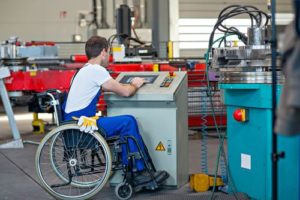
Man working in wheelchair while on workers compensationThere are numerous rules that regulate a workers’ comp claim in North Carolina. For example, you must be treated by a doctor assigned to you by your employer, and failure to keep appointments and follow the doctor’s order for treatment can jeopardize your claim.

Meanwhile, concentrating on your medical care and recovery should be your primary concern. You could be out of work for a long time. This is why obtaining workers’ comp benefits to pay medical bills and replace income is crucial and why you will be better off if someone is working to ensure you get what you deserve.

The doctors’ bills will start showing up quickly after a serious occupational injury or illness. But workers’ comp should pay them. If you are waiting for a disputed claim to be settled, a statement of representation on a Younce, Vtipil, Baznik & Banks, P.A. letterhead can keep creditors away from your door.

The post 6 Things You Need to Know About Workers’ Comp in North Carolina appeared first on .


from Younce, Vtipil & Baznik, P.A. https://www.attorneync.com/blog/6-things-you-need-to-know-about-workers-comp-in-north-carolina/
via https://www.attorneync.com

Friday, July 17, 2020

Divorce Attorney Advice for Business Owners

A married couple that runs a business together will find that their shared livelihood is a complicating factor in a divorce. It’s likely you each have a lot personally invested in the business on top of such assets like cash, equipment, product, a website, and real property.

Like a divorce itself, determining how the assets of a business will be distributed upon dissolution of the business partners’ marriage can be complicated. Either way, it will go better for you if you have an experienced and knowledgeable divorce attorney at your side and understand your options clearly.

Below is some guidance in the form of FAQs for people who own businesses and are preparing to go through a divorce in North Carolina. For more information, contact Younce, Vtipil, Baznik & Banks by phone at (877) 941-0886 in Raleigh or online.

What are the Best Ways to Protect a Business in a Divorce?

Anyone who owns a business before marriage or expects to inherit or acquire a business or business interest once married should consider a prenuptial agreement that says the business and all of its assets and liabilities will always be considered your separate property. A postnuptial agreement may be an option after marriage and provide the same protection.

If you form a business while married, the bylaws of the business could designate sole rights to the business in the event of a divorce or you could establish a buy-sell agreement and an agreed-upon business valuation methodology for coming up with a sale price. If there are additional partners or shareholders, the bylaws could establish buy-out rules allowing the purchase of a divorcing partner’s share.

A partnership may be structured as a limited liability corporation (LLC) to protect it from a divorcing spouse. As an entity standing on its own, the LLC would take on all of the business’s liability. Your estranged spouse would have no grounds for a claim against the LLC, but you could retain control of the partnership’s day-to-day operations.

How are Businesses Usually Split During Divorces? 

There are several common scenarios for transitioning business ownership when a divorce is managed properly:

  • One spouse may buy out the other’s interest in the jointly owned business.
  • The couple may sell the business to a third party and splits the proceeds.
  • The business’s assets may be divided through a process called equitable distribution.

Before the business is sold, its assets and liabilities must be fairly valued. The two most commonly used methods of business valuation for private business are:

  • Book value. Value is the assets minus liabilities listed in the company’s books, less depreciation, and adjusted for appreciation.
  • Market value. The business is valued according to what an outside buyer would pay for it while factoring in capacity for future earnings.

Depending on the size and the complexity of the business, a business consultant might be brought in to examine the business’s books, physical and digital assets, the market, and other factors.

Once values for the business and its individual assets are determined, the primary issue becomes whether certain business assets are rightly considered marital property (jointly owned) or separate property of one spouse. If a business asset was acquired with joint funds during the marriage, it should be considered marital property and shared equitably. If either spouse can show that one spouse owned a business asset before the marriage date or acquired it with their own money, it should be considered separate property and not be subject to equitable distribution.

However, in some cases, a spouse may claim partial ownership of an asset their estranged spouse owned prior to the marriage due to consideration of “sweat equity.” North Carolina recognizes the personal time and effort put into making a business successful or the investment of marital funds in a renovation, business expansion, or marketing campaign, and that a return may be due. The spouse who came into a family business, for example, may expect to be compensated for his or her contribution to the business’s success during the marriage.

In many cases, a divorcing couple will work with a third party, such as a mediator, and their respective attorneys to decide how business assets will be equitably divided. The division of assets may then become part of a private separation agreement and property settlement.

If you cannot come to an agreement outside of court, you may file a claim for equitable distribution asking the court to issue an order outlining how all your assets will be divided. Each spouse’s attorney would make their client’s case before the judge.

How a Raleigh, NC, Divorce Lawyer Can Help You Protect Your Business

Contact a Raleigh family lawyer at Younce, Vtipil, Baznik & Banks in Raleigh today for a free consultation.The dissolution of your marriage could mean the end of your business if you do not take proper steps to protect it and your right to its assets. In some cases, the dissolution of business and equitable distribution of its assets is the proper outcome of a divorce. A divorce attorney for business owners from Younce, Vtipil, Baznik & Banks, P.A., can guide you through valuation and division or sale of business assets if you are co-owner of a business and are headed for divorce.
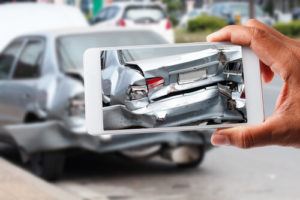
Our Raleigh divorce attorneys can call in a specialist or expert to ensure the proper valuation of a business, when necessary, and will advocate for your interests in determining the final disposition of assets and liabilities. We also can protect you from tactics sometimes employed to stall the turnover of financial documents or to hide or downplay the value of a thriving business.

Our Raleigh divorce lawyers have extensive experience helping people throughout Wake County work through the many issues that arise in separation and divorce, including determining the proper disposition of a family-owned business. We’ll protect your interests as we work to help you settle the ownership of your business and division of assets, if possible, and be ready to make your case if we must rely on the court to decide.

Contact the Raleigh family law attorneys at Younce, Vtipil, Baznik & Banks, P.A., for help making this difficult transition in your life more easily navigated.


The post Divorce Attorney Advice for Business Owners appeared first on .


from Younce, Vtipil & Baznik, P.A. https://www.attorneync.com/blog/divorce-attorney-advice-for-business-owners/
via https://www.attorneync.com

Wednesday, June 10, 2020

Autonomous Vehicles Will Prevent Only A Third Of Car Crashes, IIHS Says

Self-driving vehicles under development today may not be capable of avoiding some of the common driver errors that lead to car accidents, a recent study says. Self-driving vehicles may only eliminate about a third of car crashes, far shy of the goal of making car accidents a thing of the past.

The study from the Insurance Institute for Highway Safety (IIHS) found that driver error is the leading cause in more than 9 out of every 10 crashes. While automated cars can be programmed to identify traffic hazards, there are other types of decision-making and performance errors that have to be evaluated.  “For self-driving vehicles to live up to their promise of eliminating most crashes, they will have to be designed to focus on safety rather than rider preference when those two are at odds,” the IIHS study says. In other words, to eliminate all car accidents, autonomous vehicles would need to be specifically programmed to prioritize safety over users’ need for speed and convenience.

Avoiding Common Causes of Car Accidents Through Automation

The IIHS study provides a good look at the types of human error behind about 94 percent of all car crashes which our car accident attorneys deal with every day.

IIHS researchers examined more than 5,000 police-reported crashes from the National Motor Vehicle Crash Causation Survey and separated the driver errors that contributed to the crashes into five categories:

  • “Sensing and perceiving” errors, including driver distraction, impeded visibility and failing to recognize hazards before it was too late.
  • “Predicting” errors, including misjudging a gap in traffic, incorrectly estimating how fast another vehicle was approaching or making an incorrect assumption about what another driver was going to do.
  • “Planning and deciding” errors, including driving too fast or too slow for road conditions, driving aggressively, or leaving too little following distance from the vehicle ahead (tailgating).
  • “Execution and performance” errors, including inadequate or incorrect evasive maneuvers, overcompensation, and other mistakes in controlling the vehicle.
  • “Incapacitation,” including impairment due to alcohol or drug use, medical problems, or falling asleep at the wheel.

Obviously incapacitation would not be a problem for self-driving cars. Also, autonomous vehicles could prevent crashes caused exclusively by perception errors because cameras and sensors of fully autonomous vehicles would identify potential hazards better than a human driver. Accounting for 10 and 24 percent of car accidents, these two categories of crashes­ could be eliminated if all vehicles on the road were self-driving so long as sensors worked perfectly and other automotive systems never malfunctioned.

The report refers to a much-publicized Uber automated car accident in Tempe, Arizona in 2018. In that fatal accident, the automated car recognized 49-year-old Elaine Herzberg standing beside the road but could not predict that she would attempt to cross the road in front of the oncoming vehicle. When she did, it failed to execute the correct evasive maneuver to avoid striking her.

Jessica Cicchino, the IIHS vice president of research and co-author of the study, suggested another scenario in a discussion of the study with Autoblog. If a cyclist or another vehicle suddenly veers into the path of an autonomous vehicle, the automated car may not be able to stop fast enough or steer away from in time, Cicchino said.

“Autonomous vehicles need to not only perceive the world around them perfectly, but they also need to respond to what’s around them as well,” she said.

Self-driving vehicles could be programmed to obey all traffic laws such as speed limits. But if artificial intelligence allows them to drive and react more like humans, then fewer crashes will be stopped, Cicchino said.

“Building self-driving cars that drive as well as people do is a big challenge in itself,” Alexandra Mueller, IIHS research scientist and lead author of the study, said in the report. “But they’d actually need to be better than that to deliver on the promises we’ve all heard.”

When Will Automated Cars Be Mainstream?

what-to-do-after-an-accidentMost car companies are betting that self-driving cars are inevitable and they’re all investing billions of dollars in self-driving vehicle initiatives, according to a March 2020 report from Emerj, an artificial intelligence research and advisory company.

SAE International, a recognized engineering standards arbiter, defines six levels of driving automation, ranging from no driving automation (level 0) to full driving automation (level 5) in the context of motor vehicles and their operation on roadways.

What technology experts and car manufacturers are promising is either cars that drive themselves for a large part of a person’s highway commute (level 3) or cars that can almost drive themselves in a covered metropolitan area (level 4), Emerj says. At both levels, the human must remain alert and ready to assume control of the vehicle.

After reviewing what 10 U.S. automakers are doing to develop self-driving vehicles, Emerj concludes that manufacturers are walking back predictions of having autonomous vehicles available and on the road by the early 2020s.

In most industries, the use of artificial intelligence (AI) and machine learning (ML) has not advanced much beyond digitizing paper documents and searching digital databases.

In addition to the technological problems to be conquered, autonomous vehicles can only advance in a welcoming regulatory environment. There are serious product liability concerns, the article says, pointing out that self-driving cars have already been involved in the deaths of five people since 2016.

A 2014 Brookings Institute paper cited by Emerj says it would be a mistake to let liability concerns slow or prevent consumer access to advanced autonomous vehicle technology. It says:

The legal precedents established over the last half a century of product liability litigation will provide manufacturers of autonomous vehicle technology with a very strong set of incentives to make their products as safe as possible. In the overwhelming majority of cases, they will succeed. However, despite these efforts, there will inevitably be some accidents attributable in whole or in part to defects in future vehicle automation systems. While this will raise complex new liability questions, there is no reason to expect that the legal system will be unable to resolve them.

In short, the liability concerns raised by vehicle automation are legitimate and important. But they can be addressed without delaying consumer access to the many benefits that autonomous vehicles will provide.

If you have been injured in a car collision caused by another drive in Raleigh or elsewhere in the Triangle, contact an experienced car accident lawyer at Younce, Vtipil, Baznik & Banks to evaluate your legal options. The consultation is free.


The post Autonomous Vehicles Will Prevent Only A Third Of Car Crashes, IIHS Says appeared first on .


from Younce, Vtipil & Baznik, P.A. https://www.attorneync.com/blog/autonomous-vehicles-will-prevent-only-a-third-of-car-crashes-iihs-says/
via https://www.attorneync.com

Wednesday, May 20, 2020

Child Custody and Co-Parenting During the Coronavirus Pandemic

Divorced or separated parents who are sharing child custody during the coronavirus pandemic must consider how stay-at-home directives affect custody schedules. Family lawyers around the country are hearing about conflicts, particularly between parents who have different ideas about social distancing and other steps to avoid the virus, leading to disputes about visitation.

Few child custody and agreements or court orders will have provisions addressing how to share parenting during a pandemic. However, it is important to keep in mind that court orders for child custody and child support remain legally binding during the pandemic. There could be legal consequences for violating a custody agreement or court order.

At Younce, Vtipil, Baznik & Banks, P.A., our family law and child custody lawyers recognize the conundrum a parent faces when weighing the safety of their child against a separation or divorce agreement never meant for times like these. In addition to a child’s safety, further conflict might revolve around schools’ shift to online teaching and one parent’s ability or inability to contribute to their children’s education while they are out of school.

Parents dealing with childcare, home schooling, possible illness and other issues during the coronavirus pandemic need to focus on what is best for the child now more than ever.

If necessary, your attorneys at Younce, Vtipil, Baznik & Banks can help negotiate reasonable terms with opposing counsel so that court intervention is not required. Our legal services remain available during the coronavirus outbreak. If we can be of assistance, you should not hesitate to phone us at 919-661-3000 or contact us online.

Allowing for Parenting Time During the Coronavirus Pandemic

Governor Cooper’s March 27, 2020, “stay at home” order prohibits nonessential travel but allows for “travel between one’s place or places of residence for purposes including child custody or visitation arrangements. Cooper eased some restrictions on May 8 regarding his “Phase 1” reopening of the state economically.

Everyone should adhere to the governor’s order or to local stay-at-home orders if they impose greater restrictions.

Parents should follow the terms of their parenting agreement or custody order as written while stay-at-home orders are in effect, unless otherwise directed by the Governor or another executive or judicial order.

The COVID-19 coronavirus pandemic, in and of itself, is not a valid reason for denying parenting time to your former spouse. Unless otherwise ordered by the court, parents are considered fit to care for their child and make decisions regarding the day-to-day aspects of parenting while their child or children are in their care.

Unless a court order has imposed restraints on communication between divorced or separated parents, the parents should discuss precautions they are taking to guard against COVID-19 and to ensure the safety of their child. A parent is not permitted to deny parenting time based upon the other parent’s unwillingness to discuss precautionary measures they have taken, nor because of a parent’s belief that the other parent’s precautions are insufficient.

If an order requires supervised parenting time and the supervisor is unavailable due to pandemic-related issues or other government orders, parenting time should be conducted virtually via videoconferencing or by telephone.

If the separation / divorce agreement requires parenting time in a public place, parents and children should meet at locations permitted under Governor Cooper’s order, such as a large park, and in accordance with health and safety guidelines for social distancing. Many local parks have remained open, such as Wake County (Raleigh area) parks, and North Carolina State Parks have begun to re-open.

As parents exchange child(ren), everyone should follow the Centers for Disease Control and Prevention guidelines for limiting the spread of the virus. Consider a location for the exchanges that has fewer people congregating. For example, you may move exchanges from a favorite restaurant to a park.

Though schools are closed, the courts will consider parenting time to have continued as if children were still attending school in accordance with their regular school calendar. School closure for public health purposes is not considered an extension of any break/vacation/holiday period or weekend.

If COVID-19 Strikes a Parent’s Household

If a parent with custody or visitation rights is diagnosed with COVID-19 or displays symptoms related to COVID-19, or a member of his or her household is diagnosed with or displays symptoms related to COVID-19, the parent should ensure that the other parent is notified as soon as possible.

If a current court order prohibits communications, notification should be ensured through some method other than direct contact between the parents. If assistance is needed, feel free to contact Younce, Vtipil, Baznik & Banks for help relaying this important information.


The post Child Custody and Co-Parenting During the Coronavirus Pandemic appeared first on .


from Younce, Vtipil & Baznik, P.A. https://www.attorneync.com/blog/child-custody-and-co-parenting-during-the-coronavirus-pandemic/
via https://www.attorneync.com