Wednesday, March 25, 2020

Concerned About Coronavirus? You Don’t Need to Leave the House to Meet with Our Lawyers.

We all have a duty to keep ourselves, our families, our neighbors, and our communities safe right now. This means temporarily reshaping the way we live our lives to combat the novel coronavirus (COVID-19). At Younce, Vtipil, Baznik, & Banks, we are taking this duty seriously and are practicing the “social distancing” guidelines recommended by health officials. To ensure you still have access to us, our lawyers are available to meet with you remotely so we can answer your legal questions and discuss your case.

Across the nation, people are limiting in-person contact as much as possible to help slow the spread of the virus and allow our healthcare system to operate within its capacity. The U.S. Centers for Disease Control and Prevention continues to provide important guidance about what we all can do to protect ourselves and others from exposure. (Visit the CDC website for the most up-to-date information and recommendations.)

During this challenging time, our attorneys remain available to talk about your legal issues over the phone or via free video conferencing services such as:

  • GoToMeeting
  • Facetime
  • Skype
  • Zoom

If you are ready to speak with a lawyer now, please contact us to schedule your free consultation. Our team can meet with you remotely and get started on your case immediately without having to talk in person.

COVID 19 Prevention: Social Distancing

 Health officials are recommending “social distancing” measures to cut down on close contact. This will help minimize the spread of the Coronavirus (COVID-19). Please make sure you review the Centers for Disease Control and Prevention (CDC) for more information about other steps you can take to protect yourself and others from exposure to this virus.

General Info About (COVID-19)

More and more information about the virus is coming out daily. Please stay up to date on information and symptoms by checking the CDC’s website.

This virus spreads easily and sustainably! You can get COVID-19 “by touching a surface or object that has the virus on it and then touching your mouth, nose, or eyes.” It is thought that you are most contagious when you are displaying symptoms, however you can be contagious before you even show symptoms.

Symptoms of Coronavirus 

Here are some of the major symptoms of the virus:

  • Respiratory Tract Infection – shortness of breath
  • Fever/chills
  • Cough
  • Flu-like symptoms
  • Fatigue
  • Pressure in the Chest
  • Headaches
  • Muscle or Body Aches
  • Sore Throat

Please note that carriers of the virus may not be displaying symptoms and that you are still at risk and may be carrying the virus and not know unless you are tested.

Contact Younce, Vtipil, Baznik, & Banks

If you were hurt in an accident and are seeking legal help, let the attorneys at Younce, Vtipil, Baznik, & Banks help you – in the comfort of your own home! If you would like to discuss your legal issues with any one of our attorneys, we can simply meet with you by phone.

Contact us now at (877) 941-0886 to schedule your free consultation and learn more about how we can meet with you remotely to review your claim.

*This blog was written with the most up to date information and this information is subject to change as more information about the virus is released & found.

The post Concerned About Coronavirus? You Don’t Need to Leave the House to Meet with Our Lawyers. appeared first on .


from Younce, Vtipil & Baznik, P.A. https://www.attorneync.com/blog/concerned-about-coronavirus-you-dont-need-to-leave-the-house-to-meet-with-our-lawyers/
via https://www.attorneync.com

Tuesday, March 17, 2020

Your Honesty in the Divorce Process Is Crucial

Divorce is an emotionally charged and painful process. Many see the dissolution of a marriage as a personal failing. A man or woman going through divorce might reflexively hold back embarrassing details about certain issues that led to the breakup when speaking to anyone, including his or her attorney.

You may ask, why should I tell my lawyer everything? The reason is that what your attorney doesn’t know about the factors contributing to your marital breakup can hurt you. It can cost you money now and into the future and exact an emotional toll as your children grow up. Whether or not your spouse was honest with you, you need to be honest with your attorney.

The attorneys at Younce, Vtipil, Baznik & Banks encourage you to be fully open and honest when speaking with our compassionate Raleigh divorce lawyers. We are here to help you, not judge you. Having the complete facts can help us represent you more effectively. We are bound by professional ethics to keep confidential the information shared by clients.

There are a multitude of issues that may arise between a divorcing couple. We need to know about all the contributing factors if we are to protect your interests as you go through separation and divorce.

If your spouse’s attorney has damaging information about issues or incidents, you should expect that the opposing side will use it against you and may irreparably damage your case if your attorney doesn’t have knowledge of the information.

What Your Divorce Attorney Needs to Know

Whether you think your divorce will be amicable or contentious, it is crucial that you have an experienced attorney on your side who can remain calm and provide clear-eyed legal guidance. You need someone who understands your legal rights under North Carolina divorce law who will protect you and help you make proper decisions for yourself and your children, and about your property and other financial assets.

Few people, who have not gone through divorce, are aware of the many issues that should be taken into consideration. Before meeting with your Younce, Vtipil, Baznik & Banks attorney for your first at-length discussion of your reasons and goals for seeking a divorce, you should take the time to reflect and write down notes about issues we’ll need to discuss. We’ll have some general questions and some specific ones we ask all clients to guide the conversation.

In general, what we need to know includes:

  • Personal Information
    • Length of the marriage
    • Existence of prenuptial agreement
    • Each spouse’s age and health
    • Each spouse’s education (ability to earn a living)
    • Each spouse’s income
    • Either spouse’s financial contributions to the other’s education
  • Finances (joint and/or each spouse’s)
    • Income tax returns for the past three to five years (federal and state)
    • Bank accounts, retirement and pension accounts, stock, bonds
    • Property, such as real estate and valuable personal property such as cars, boat, RV, artwork, jewelry
    • Life insurance policies
    • Business assets and debts
    • Debts (credit card, mortgages and other loans)
    • Disposition of estate planning documents (wills, powers of attorneys, health care directives)
    • Any potential for your spouse to be holding “hidden” assets and/or debts
  • Specific Desires for Division of Assets (strong desire to retain certain personal or real property)
  • Child Custody / Visitation Desires
  • Child Support Needs
  • Pet Custody Issues
  • Marital Issues—any possible allegations against either of you of:
    • Infidelity, including emotional affairs (a close or “special” friend of the opposite sex a spouse confides in)
    • Physical or emotional/verbal spousal abuse
    • Child abuse
    • Alcohol abuse / alcoholism
    • Drug abuse / addiction
    • Other addictions (gambling, pornography).
    • Abandonment (one spouse moving out of the house without the consent of the other spouse)
    • Public / social media discussion of your divorce and/or marital problems.

We will always ask if there is anything else we need to know to make sure we can defend you against any allegation that your spouse’s attorney might make.

We recognize that you may not have all of this information right away or available to you at all. Part of our work as your divorce attorney is to investigate your spouse’s asset and debt declarations and any open allegations of spousal misconduct of any kind. As your attorneys, we will always be open to hearing from you and speaking with you, whenever you have information or questions for us.

The sooner we are fully and accurately apprised of your situation and your needs and desires, the sooner we can craft a strategy to achieve a divorce agreement that protects your rights and addresses your needs. We are dedicated to protecting you as you go through separation and divorce. As your attorneys, we will be focused on that. We are not here to judge you – or your spouse.

Contact Our Raleigh Divorce Attorneys

A family law attorney at Younce, Vtipil, Baznik & Banks can guide you through the divorce process and stand up for you. If you do not have a North Carolina separation and divorce attorney, contact a Raleigh family law attorney at Younce, Vtipil, Baznik & Banks in Raleigh to schedule an initial meeting. We can outline our family law services and fee structure as we get to know one another.

We are dedicated and compassionate family law attorneys who take our clients’ legal and personal needs seriously as they go through separation and divorce proceedings.

Our top priority is an outcome that meets your best interests. Call us to speak with someone today.

The post Your Honesty in the Divorce Process Is Crucial appeared first on .


from Younce, Vtipil & Baznik, P.A. https://www.attorneync.com/blog/your-honesty-in-the-divorce-process-is-crucial/
via https://www.attorneync.com

Friday, February 21, 2020

Higher Injury Rate Found Among Temporary Workers

A recent analysis of workers’ compensation claims found that temporary workers are more likely to suffer job-related injuries than permanent employees in the same industries. The researchers focused on training received by temporary workers and wrote that training may be particularly important for younger and less experienced temporary workers.

Workers’ compensation insurance provides medical benefits and partial wage replacement for workers injured on the job.

The study by the National Institute for Occupational Safety and Health (NIOSH) analyzed more than 1.3 million workers’ compensation claims from 2001–2013, including 45,046 claims from workers employed by temporary service agencies, to compare the injury risk for temporary and permanent workers.

“The differences in injury rates for temporary and permanent workers were pronounced in certain industries — agriculture, construction and extraction — as well as for causes of injuries — contact with objects and equipment and exposure to harmful substances or environments,” according to BLR, a safety compliance consultant reporting the study.

U.S. Bureau of Labor Statistics (BLS) data “indicates that temporary workers are especially likely to have manufacturing jobs, with 32.2% of temporary agency workers reporting employment in manufacturing, the study authors wrote for the Centers for Disease Control and Prevention (CDC).

The researchers concluded that:

  • the prevention of injuries among temporary workers must include proper training.
  • training may be especially important for younger and less experienced temporary workers.
  • training for temporary workers should occur both before placement at the worksite and continue after placement.
  • there should be an increased safety focus when temporary workers are placed in high-risk industries such as agriculture, construction, and manufacturing.

Several states, including Massachusetts, California and Illinois, have established Right‐to‐Know laws to inform temporary workers of their rights under the Workers’ Compensation system, such as the right to proper training as well as workers’ comp benefits if injured on the job, the researchers noted.

Temporary Staffing Covered by Workers’ Compensation in N.C.

Workers’ compensation is an insurance program, and almost all companies in North Carolina, including temp agencies, that employ three or more part-time or full-time employees are required to provide workers’ compensation coverage to employees. Part-time workers and most temporary staffing may qualify as employees under N.C. workers’ comp law and be eligible for workers’ compensation benefits.

An independent contractor — a person who provides specific services based on a written or oral contract and controls his or her own work schedule — is not eligible to receive workers’ compensation coverage. However, some employers misclassify employees as independent contractors to avoid paying workers’ compensation benefits.

If you are working through a temporary employment agency, you are employed and may be eligible for workers’ compensation. There are also guidelines to determine whether a worker qualifies as an employee.

The N.C. Industrial Commission, which oversees workers’ compensation in the state, will determine whether the injured worker is really an employee and not an independent contractor. However, the commission often works from information supplied by the employer. If you think that you have been incorrectly classified as an independent contractor, you should consult an experienced North Carolina workers’ compensation attorney immediately.

What Happens to a Temporary Worker Injured At Work?

As a temporary employee on a job, in most cases, you are an employee of an agency contracted by a company to supply extra labor on a temporary or part-time basis. This means your workers’ compensation coverage is provided by the agency, not the company for which you perform the job duties. Your claim should progress normally through the temporary agency’s workers’ comp provider.

What many temp workers do not understand is that this arrangement potentially makes more compensation available to them after a workplace accident and injury.

Under N.C. workers’ compensation law, in exchange for providing employees with workers’ comp insurance, employers are immune from lawsuits regarding accidents and injuries at work. Workers’ comp is no-fault insurance. The injured employee is entitled to certain benefits regardless of whether he or she was at fault.

Injured workers also may have a legal right to file a personal injury lawsuit against an individual or business, other than the employer, after a workplace injury. For example, the Acme Company may be subject to a legal claim if you were injured while working there but an employee of a temporary employment agency. Others on the job site — contractors, vendors, co-workers — may also be subject to claims if they caused your injury, because they are not your employer.

While workers’ comp reimburses the injured for medical bills and a portion of lost wages, a personal injury claim may seek additional compensation, such as for pain and suffering, property damage and, in some cases, as punitive compensation for egregious disregard for others’ safety.

A knowledgeable workers’ compensation lawyer can review the circumstances of your injury and discuss your legal options.

Contact a North Carolina Workers’ Comp Lawyer for Temporary Workers

If you are a temporary worker who has been injured on the job and lost work time in central North Carolina, contact Younce, Vtipil & Baznik, P.A., in Raleigh about your workers’ compensation case. An initial consultation is free and without further obligation. We can explain how your workers’ comp claim should move forward and what you need to do to protect your claim. Our attorneys are ready to fight workers’ comp insurers to obtain the full and proper settlement that you deserve.

Our team at Younce, Vtipil & Baznik P.A. can investigate the circumstances of your accident to determine whether a third-party personal injury claim is appropriate. Workplace injuries can be costly, keeping you out of work for months or limiting your ability to return to work. You deserve the maximum compensation available for your losses now and in the future.

With us fighting for you, you can focus on getting your life back together. Call us now or contact us online for a free claim review and advice about your legal options.

The post Higher Injury Rate Found Among Temporary Workers appeared first on .


from Younce, Vtipil & Baznik, P.A. https://www.attorneync.com/blog/higher-injury-rate-found-among-temporary-workers/
via https://www.attorneync.com

Tuesday, January 28, 2020

How Incorrect Diagnosis During Treatment for Car Accident Injuries Can Affect Your Claim

Emergency room doctors do not always identify the full extent of a car crash victim’s injuries when providing trauma care after a collision. The symptoms of some serious injuries including head injuries may not be apparent for weeks or even months after the accident. A crash victim may develop post-traumatic stress after a life-threatening accident and require counseling. The initial diagnosis may be incomplete. If you move too quickly to accept an insurance company’s settlement offer before you have been released from a doctor’s care, you may be shortchanging yourself.

Having a complete medical record of your injuries and a clear understanding of all your present and future medical needs is crucial to maximizing your recovery in a personal injury claim. Once you sign a liability release and accept an insurance company’s settlement check, you cannot go back to the insurance company and ask for more money if you have additional unforeseen medical expenses.

This issue of incomplete diagnoses underscores the importance of having an experienced personal injury attorney guiding you through the car accident injury claims process. A knowledgeable injury attorney will make sure that your medical records are complete and your future treatment needs are understood. The attorney should determine the full extent of your medical expenses and financial losses before entering into a settlement agreement.

Can a Missed Diagnosis Hurt Your Car Wreck Claim?

The issue of missed diagnoses and incomplete diagnoses is common. Misdiagnosis may lead to 80,000 to 160,000 serious cases of harm to people’s health each year, a recent study estimates. Between 40,000 and 80,000 patient deaths in hospitals in the United States may be related to misdiagnosis.

The study, led by Dr. David Newman-Toker, Ph.D., director of the Johns Hopkins Armstrong Institute Center for Diagnostic Excellence, determined that the most significant diagnostic errors related to a surprisingly small number of conditions, according to Medical News Today. In fact, misdiagnoses of three conditions—infections, cancers and vascular events such as stroke and pulmonary embolisms— were responsible for nearly 75% of all serious harm related to misdiagnosis errors.

Diagnostic errors are recognized as a significant source of preventable harm to patients. If you have been harmed by the misdiagnosis of a medical condition related to a car accident or other personal injury accident, you may have a right to seek full compensation for all your injuries and losses. The personal injury lawyers of Younce, Vtipil, & Baznik, P.A., can work to help you seek full compensation.

Researchers broke down the “big three” – cancer, vascular events and infection – into 15 specific conditions, the misdiagnosis of which often resulted in serious harm. Excluding cancers, they include:

  • Sepsis (blood infection)
  • Meningitis and encephalitis (brain and spinal cord infection)
  • Spinal cord abscess
  • Pneumonia (lung infection)
  • Endocarditis (infection of the endocardium, the inner lining of heart chambers and valves)
  • Stroke
  • Blood clots, especially in legs and lungs
  • Aortic aneurysm and dissection (weakness and tears in the heart)
  • Heart attack.

As a study in the Journal of the National Medical Association explains, “The most common cause of death following trauma (personal injury) is sepsis. The traumatized patient has a significant increased risk of infection.” The need for transfusions, the prevalence of hypotension (low blood pressure) and the prolonged use of ventilators, if necessary, are predictive for blood infections.

Another piece of research, entitled “Early predictors of sepsis in the motor vehicle crash trauma victim,” cited major blood vessel injury, head injury, internal injury of the chest or abdomen, spinal cord injury, certain fracture types and having seven or more injuries as predictors of sepsis.

The Mayo Clinic explains that sepsis has the potential to be a life-threatening condition caused by the body’s response to an infection. Sepsis can lead to damage to multiple organ systems. If the sepsis develops into septic shock, the blood pressure may plummet dramatically. Septic shock may lead to death.

“Suffering an injury to the head or neck increases ischemic stroke risk three-fold among trauma patients younger than 50,” according to research presented at the American Heart Association’s International Stroke Conference. Torn blood vessels leading to the brain in the head or neck resulting from a car accident can be a source of blood clots that cause a stroke may be preventable. Similarly, blood clots formed by trauma to the heart can cause heart attacks.

Even if none of these conditions are a direct consequence of an accident, like a car accident or a serious fall, they should be considered in a personal injury claim. But if they were not correctly diagnosed in a timely manner, they may not have been included in evidence compiled for your claim. An incomplete diagnosis can adversely affect your accident claim.

Mental Health Issues After Traumatic Injury

Another cost often overlooked in personal injury claims is the costs of psychological recovery. Suffering or even witnessing a loved one’s catastrophic injury in a violent accident can cause psychological issues akin to post-traumatic stress disorder (PTSD). A permanent disability from an injury or a long-term recovery can lead to depression.

But psychological problems are difficult to diagnose. Most doctors are primarily trained to cure physical problems and can easily misdiagnose or fail to consider mental illness. A PTSD response to trauma is by its very nature a delayed response. Meanwhile, patients are trained by society (improperly) to say, “I’m fine” in response to questions or offers of help, whether to reassure themselves or to avoid the stigma of mental illness.

Counseling needed to cope with the aftermath of a traumatic injury is available and helpful in most cases, and the costs are recoverable in a personal injury claim.

Contact a Raleigh Personal Injury Attorney

If you have been seriously injured in a car accident that someone else caused, you deserve full compensation for the costs of the harm you have unjustly suffered. The personal injury lawyers of Younce, Vtipil, & Baznik, P.A., can gather your medical records and prepare a claim that reflects the full extent of your losses after a car accident or other personal injury accident.

When someone else was at fault for your injuries, you should not have to worry about paying the medical bills necessary to make your life right again. Our attorneys handle a variety of personal injury claims throughout North Carolina, including car wrecks, truck wrecks, motorcycle accidents, slip-and-fall injuries, on-the-job injuries, wrongful death cases and others.

Let us review your case at no charge to evaluate what we can do to help you seek all of the compensation available in your situation. Just fill out our online contact form or give us a call today.

The post How Incorrect Diagnosis During Treatment for Car Accident Injuries Can Affect Your Claim appeared first on .


from Younce, Vtipil & Baznik, P.A. https://www.attorneync.com/blog/incorrect-diagnosis-and-unfair-compensation-for-injuries/
via https://www.attorneync.com

Friday, January 3, 2020

Recent Updates Strengthen NC’s “Move Over” Law

Motorists who do not comply with North Carolina’s “Move Over” law requiring drivers to change lanes or slow down when approaching roadside emergency responders should know that the penalty for violating this traffic law increased significantly as of December 1, 2019, if a violation causes a serious accident.

The Move Over law requires motorists on multi-lane highways to move over one lane when approaching emergency response or maintenance vehicles stopped on the side of the road with lights flashing, if they can do so safely, or to slow down on a two-lane highway until past the emergency responder. The idea is to create a greater margin of safety for emergency responders.

Violating the law is punishable by a $250 fine, plus court costs. If the violation leads to an accident that causes property damage or injury, the driver could be charged with a Class 1 misdemeanor and subjected to a $500 fine. A Class 1 misdemeanor in North Carolina carries a maximum penalty of 120 days in jail.

Revisions to the law make it a Class F felony if a driver fails to move over or slow down and causes serious injury or death to a law enforcement officer, a firefighter, an emergency vehicle operator or utility worker covered by the statute. A Class F felony in North Carolina is punishable by 10 to 41 months (3 years, 5 months) in prison. It was formerly a Class I felony, punishable by 3 to 12 months in prison.

The law also limits the use of flashing or strobing amber lights to emergency, utility and other authorized vehicles. Another law prohibits red and blue lights in private vehicles.

Further, a driver convicted of causing serious injury or death to an emergency responder in violation of the Move Over law can lose their driver’s license for up to six months.

Any violation of the Move Over law results in 3 insurance points on your driver’s license, which can increase your auto insurance premiums by as much as 60% for three years.

NC Move Over Law Applies to Many Types of Emergency Responders

While most of us understand we should move over for police and fire vehicles, all North Carolina motorists need to understand that the Move Over law covers multiple types of vehicles.

The law specifically mentions:

  • Law enforcement vehicles
  • Fire department vehicles
  • Public or private ambulances or rescue squad vehicles
  • Public or private highway maintenance vehicles operating an amber-colored flashing light
  • Vehicles operated by the:
    • North Carolina Forest Service
    • C. Division of Parks and Recreation
    • C. Division of Marine Fisheries
  • “Public service vehicles” that are:
    • Responding to wrecked or disabled vehicles, such as tow trucks
    • Installing, maintaining or restoring utility services, including electric, cable, telephone, communications and gas
    • Collecting garbage, solid waste or recycling.

Why North Carolina Has a Move Over Law

All 50 states have “Move Over” laws. The U.S. Department of Transportation says that, since 2007, more than 150 law enforcement officers have been killed after being struck by vehicles along America’s highways. In 2017, nine officers were struck and killed outside their vehicles.

North Carolina adopted the Move Over law in 2002. When it was first enacted, drivers who violated the rule faced a $25 fine, plus court costs.

By 2014, the North Carolina Department of Transportation was working to raise awareness about the law because, in the previous year, state troopers had issued more than 1,400 citations to drivers for violating the Move Over law, according to WRAL in Raleigh.

An earlier incident had already led to stiffer penalties that should have increased awareness of the law and its importance.

On August 11, 2005, State Patrol Trooper M.G. McLamb was conducting a traffic enforcement stop on U.S. 301 near the N.C. 59 Exit just south of Fayetteville in Cumberland County. About 1 p.m., McLamb was standing on the driver’s side of the stopped vehicle and had just turned to return to his patrol car when the vehicle of a motorist who had failed to move over and decrease speed hit him. McLamb was treated at a local hospital and released.

The motorist returned to the accident scene and was charged with careless and reckless driving, according to WRAL.

At the time, the Highway Patrol said that, since 2002, 72 troopers had been struck either while in or outside of their patrol cars alongside highways.

A month earlier, the General Assembly had increased the fine for causing an injury to an emergency responder when violating the Move Over law from $120 to $250. After McLamb’s injury, the fine was increased to $500. The General Assembly also added the possibility of being charged with a felony if a collision occurs that results in serious injury or death. These changes went into effect on July 1, 2006.

The Move Over law expanded in 2012 to include roadside utility or maintenance crew vehicles bearing flashing amber lights.

On December 5, 2018, just before 7 a.m., Lumberton Police Officer Jason Quick, age 31, was assisting in an investigation of an accident at Exit 22 on Interstate 95 North in Lumberton when a motorist struck and killed him.

Senate Bill 29, which led to the increased penalty for injuring an official in a Move Over violation in 2019, is known as the “Officer Jason Quick Act.”

“Law enforcement officers like Jason Quick put their lives on the line to keep our communities safe,” Gov. Roy Cooper said in a news release upon signing the bill into law in July. “This bill will increase penalties for those who recklessly endanger the lives of our first responders, and I’m proud to sign it in memory of Officer Quick and in honor of all of our first responders.”

Contact a Lawyer About Roadside Injuries Caused by Motorists

An emergency responder or utility worker injured by a negligent motorist while working alongside a North Carolina highway deserves to be fully compensated for his or her injuries and related expenses and losses. It is best to contact a North Carolina law firm with attorneys experienced with workers’ compensation, car accident and personal injury cases.

An attorney from Younce, Vtipil, & Baznik, P.A. in Raleigh will fight insurance adjusters who try to pay you as little as possible to settle a valid claim. A civil lawsuit seeking compensation for your medical bills, lost income, pain and suffering is separate from potential criminal charges a driver may face. You will need to pursue a personal injury lawsuit independently of any criminal prosecution of the at-fault driver. We serve all of North Carolina and can help you. Let a personal injury lawyer at Younce, Vtipil, & Baznik, P.A. explain your options in a free, no-obligation legal consultation. Contact us today.

The post Recent Updates Strengthen NC’s “Move Over” Law appeared first on .


from Younce, Vtipil & Baznik, P.A. https://www.attorneync.com/blog/nc-move-over-law/
via https://www.attorneync.com

Thursday, November 21, 2019

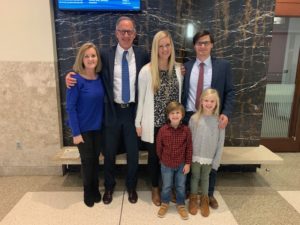
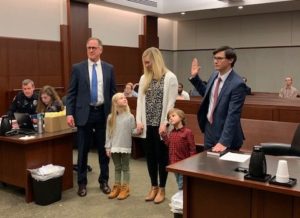
Welcome to New Attorney Ross Weatherspoon

Younce, Vtipil & Baznik, P.A. is pleased to announce the recent addition of Attorney W. Ross Weatherspoon to our law firm. Ross will concentrate his legal practice in the area of family law.

As a domestic law attorney, Ross seeks to provide legal guidance to clients who are going through some of life’s most difficult transitions, including separation, divorce, and issues involving child custody and spousal support.

He recognizes that people going through the process of ending a marriage may be on an emotional roller-coaster and need compassion and steadfast guidance. His goal is to help each client take into consideration all the financial aspects and issues that arise in a divorce and to deal with the issues effectively so that the client can move forward with his or her life. He also assists clients with separation agreements, protective orders and seeking positive solutions to situations involving domestic violence and abuse.

Ross’s hands-on approach fits well with the focus at Younce, Vtipil & Baznik P.A. to provide compassionate and personalized legal service to our clients.

Past Experience Informs Work as a Family Law Attorney

Ross has dedicated much of his life to serving others—as a Raleigh police officer and a church missionary before obtaining a law degree.

During Ross’s law enforcement career, he had the chance to engage with members of the community from all walks of life and to learn effective strategies to de-escalate tense situations and to resolve contentious disputes peacefully. He also served as a Spanish language translator. Those are skills that serve him well as a family law attorney dealing with emotionally charged domestic situations.

Ross grew up in Baker City, Oregon and served two years as a missionary in the Dominican Republic from 2006 to 2008 where he learned to speak Spanish fluently before moving to Wake County. He obtained a bachelor’s degree from East Carolina University. While completing his undergraduate degree, he began working as a law enforcement officer for the Raleigh Police Department.

Fluency in Spanish Language

Ross’s language fluency helps him discuss family law legal questions with clients who primarily speak Spanish. He knows that clients are most comfortable discussing domestic issues in their first language, whether that is English or Spanish.

His experience as a police officer helped him manage his time and succeed academically when he enrolled at North Carolina Central University School of Law. He was awarded a full-tuition scholarship while in law school and was selected to serve as Senior Editor of the North Carolina Central Law Review. Ross was selected to work as an Academic Success Fellow and he volunteered his time two days a week to read to kindergarteners at Burton Elementary School in Durham. He graduated Summa Cum Laude from law school and passed the North Carolina State Bar to gain admission to practice law in North Carolina.

He is a member of the North Carolina Bar Association (NCBA), NCBA Family Law Section, and the NCBA Young Lawyers Division.

Ross and his wife, Rachel, have two children. The active family enjoys hiking in the North Carolina mountains, camping and exploring the state parks.

The attorneys at Younce, Vtipil & Baznik P.A. are passionate about helping people, and we are proud to welcome Ross Weatherspoon to our firm. From our offices in Raleigh, we serve clients throughout the Triangle and beyond.

The post Welcome to New Attorney Ross Weatherspoon appeared first on .


from Younce, Vtipil & Baznik, P.A. https://www.attorneync.com/blog/welcome-new-family-law-attorney-ross-weatherspoon/
via https://www.attorneync.com

Tuesday, November 19, 2019

Study Shows that Longer Work Commutes May be Safer

We learn early that the shortest distance between two points is a straight line. But a recent study of commuter traffic suggests that a longer route between home and work is safer and less likely to end in a car accident.

The study by University of Illinois researchers was a project to produce an algorithm to help urban planners route city traffic. The report is as complex as you’d expect the explanation of an algorithm to be. What they found was that urban commuters may be less likely to encounter automobile accidents if they are willing to increase trip time, a news release says.

The findings are based on traffic speed, accident count, and trip origin and destination data collected from New York City taxi services and police reports. “The data shows that the shortest routes between two points, distance-wise, often have the most automobile accidents,” said lead study author Richard Sowers, a professor of mathematics and industrial and enterprise systems engineering.

The study showed that a Manhattan commuter willing to increase travel time by about 15% during the evening or morning rush hour might reduce the number of accidents they encounter on their route by up to 18%, according to the release

Chance of A Car Accident On Your Way To Work

For commuters driving to and from work in Raleigh, Cary, Durham and the greater Triangle, the algorithm created by the researchers does not predict the likelihood of accidents.

But it goes to figure that the shortest commute routes are the most crowded and most likely to be the location of car accidents during rush hour.

The North Carolina Department of Transportation’s Traffic Crash Facts 2017 shows a significantly higher number of crashes in the 7-8 a.m. and 3-5 p.m. hours on weekdays compared to other times of the day. Taking a route across the Triangle that avoids Interstate 40 may be a safer bet.

At Younce, Vtipil & Baznik, P.A., we help people who have been in car accidents obtain insurance compensation when the injury was caused by someone else’s carelessness or disregard for safety. We also assist injured workers with workers’ compensation claims. Sometimes the two types of cases intersect if a worker driving as part of their job duty is injured in a car accident by another motorist.

Unfortunately, while we can seek and obtain other compensation for an unjustly injured driver or passenger, accidents that happen during workers’ commutes are not generally covered by workers’ compensation insurance.

Workers’ Compensation and the ‘Coming and Going Rule’

In general, workers’ compensation pays medical bills and a portion of lost wages for an employee who is injured in the course of performing his or her job.

Most work-related injuries happen at a job site, but accidents are also covered by workers’ comp if they happen away from the workplace – if the employee is on the clock and engaged in work-related activity. This includes accidents at work-sponsored trade shows or social events, such as holiday parties, for example.

Individuals who drive as part of their job are covered by workers’ comp for auto accidents that occur while they are working. This includes accidents that delivery drivers may get into, or an accident that occurs on a business trip or while traveling between two company office locations during the workday.

However, a tried and tested rule, known as the “coming and going rule,” holds that the daily commute is not part of the job and is not covered by workers’ compensation. There are exceptions, which have also been upheld when challenged:

  • Company transportation. If your employer has agreed as part of your employment to provide you transportation to and from work, an accident would be covered by workers’ comp. This includes travel in a company vehicle, such as one you take home and are to use only for work, or in a van that picks up multiple employees. It also applies if you are regularly reimbursed for commute mileage traveled in your own vehicle.
  • “Special mission” or dual-purpose travel. If your employer asks you to travel and you get into an accident, your injuries should be covered by workers’ compensation. For example, no one can find an extension cord needed to make a sales presentation, and the boss asks you to buy one on the way to work the next morning. An accident on this commute would be covered. When travel is at least partly to benefit the employer, an accident may be covered by workers’ comp. If you had already stated plans to stop by the store on your way in the next morning and your boss asked you to pick up an extension cord while there, any accident on the trip would be covered.

Contact a Raleigh Personal Injury / N.C. Workers’ Comp Lawyer

Our experience as Younce, Vtipil & Baznik, P.A., as personal injury and workers’ compensation lawyers allows us to help you after a car accident. We will seek to identify all types of insurance coverage that may provide compensation for your injuries. An employer will suggest you look to your own insurance after a work-related car accident. But if you are due workers’ compensation benefits, we can help you obtain them.

Workers’ compensation is a type of insurance protection that most employers in North Carolina are required to carry to cover worker injuries. You may be unfamiliar with it until an injury occurs and you find yourself with questions about your rights and the insurer’s delay or denial of your claim.

Let Younce, Vtipil & Baznik level the playing field for you. We can review your car accident and injuries and discuss your legal rights to pursue compensation, including workers’ comp benefits, in a free initial consultation. Our goal is to help you obtain the money you need to be made whole after a serious injury. Call us now or contact us online.

The post Study Shows that Longer Work Commutes May be Safer appeared first on .


from Younce, Vtipil & Baznik, P.A. https://www.attorneync.com/blog/study-shows-that-longer-work-commutes-may-be-safer/
via https://www.attorneync.com